Why Prefabricated Modular Container Houses Are Gaining Attention?
Sep 16, 2026
When a major natural disaster damages thousands of homes, one of the biggest challenges is not only rebuilding — it is rebuilding quickly, safely, and at scale.
Jamaica provides a recent example of why prefabricated modular housing is attracting increasing attention. Following Hurricane Melissa, which caused extensive damage to homes across the country, the Jamaican government announced plans to procure thousands of pre-built container homes for rapid deployment. By May 2026, more than 900 modular container houses had already arrived on the island.
At the same time, Jamaica's Bureau of Standards reported a significant increase in applications from modular housing providers seeking assessment of their building systems. According to the Bureau, applications received since Hurricane Melissa exceeded the number received during the previous 15 years combined.
These developments highlight a broader question: Why are Factory Built Modular Container Houses becoming an increasingly practical option for rapid housing projects?
What Are Prefabricated Modular Container Houses?
Prefabricated modular container houses are housing units that are manufactured or assembled to a significant degree in a controlled factory environment before being transported to the project site.
Unlike traditional construction, where most work takes place directly on site, modular housing moves many processes into the factory. Structural components, wall panels, doors, windows, electrical systems and interior finishes can be prepared in advance.
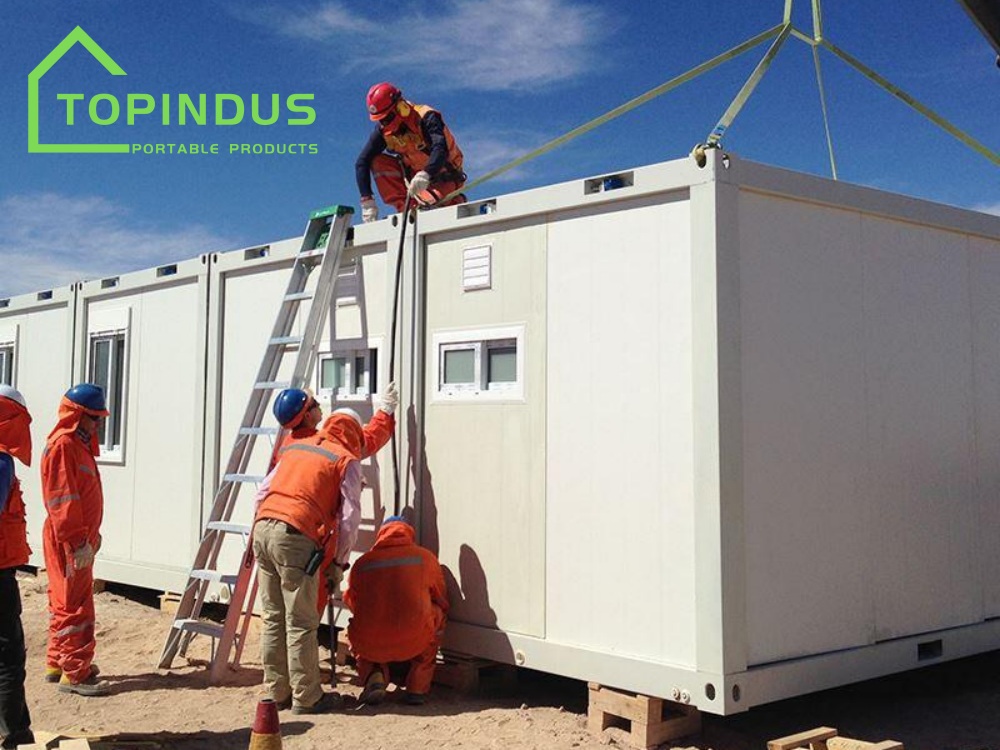
Once the units arrive at the destination, workers can complete the installation and connections much faster than constructing an entire building from the ground up.
This makes Affordable Prefab Container Houses particularly suitable for projects where speed, standardization and scalability are important.
Why Are Modular Container Houses Suitable for Disaster Recovery?
1. Faster Deployment
After a hurricane, earthquake, flood or other disaster, affected families may need temporary or semi-permanent housing while permanent reconstruction is underway.
Traditional housing construction can require considerable time for foundations, structural work, walls, roofing, electrical installation and finishing.
With prefabricated modular housing, many of these processes can be completed before the units leave the factory. This can significantly reduce the amount of work required at the destination.
For large-scale recovery programs, this difference can become especially important.
2. Factory-Controlled Production
Another advantage is that manufacturing takes place in a controlled environment.
Factory production allows manufacturers to standardize dimensions, inspect materials and carry out quality-control procedures before the units are shipped.
For projects involving hundreds or thousands of housing units, standardized production can also make it easier to maintain consistency between different units.
3. Scalable for Large Housing Projects
Disaster recovery is rarely about building just one house.
Governments, developers and organizations may need hundreds or thousands of housing units in different locations.
Modular construction is well suited to this type of demand because multiple units can be produced according to standardized designs and then transported and installed in batches.
Jamaica's post-Hurricane Melissa housing program demonstrates this potential. The National Housing Trust announced plans to procure 5,000 pre-built container homes for rapid deployment following the disaster.
4. Easier Transportation and Installation
Many Custom Prefabricated Container House For Projects designs are developed around standard transportation dimensions.
Flat-pack and other space-efficient designs can further improve loading efficiency during international transportation.
After arrival, the units can be assembled or installed on prepared foundations, allowing projects to move from transportation to construction relatively quickly.
For international housing projects, transportation efficiency can therefore be an important part of the overall project cost and schedule.
Beyond Disaster Relief: Where Else Can Modular Container Houses Be Used?
The applications of Portable Modular Container Houses For Accommodation are not limited to emergency housing.
They can also be used for:
Affordable housing projects
Social housing
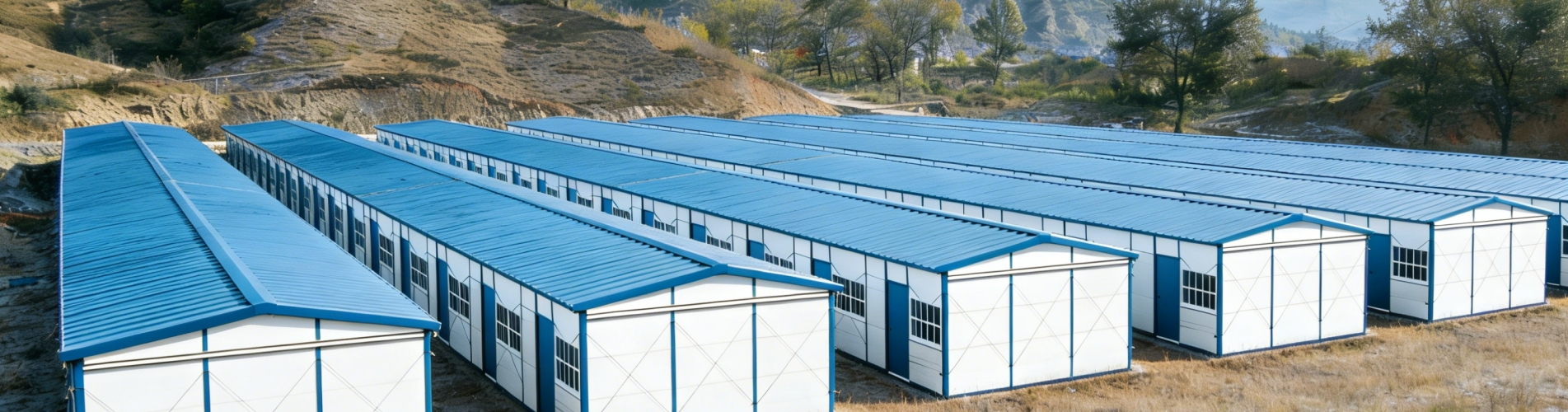
Construction worker accommodation
Mining and remote-site camps
Temporary offices
Student accommodation
Military and emergency facilities
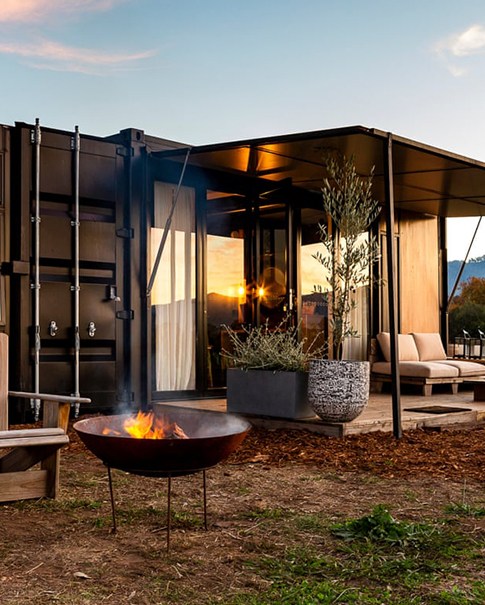
Tourist accommodation and Glamping
Rural housing projects
Community housing developments
This broader application is important because the demand for modular housing is not necessarily limited to periods immediately following a disaster.
In regions facing housing shortages, labor shortages or difficult construction conditions, factory-produced housing can provide another approach to delivering buildings more efficiently.
Resilience Matters as Much as Speed
Fast construction alone is not enough for disaster-prone regions.
For areas exposed to hurricanes, strong winds, earthquakes, heavy rain or other environmental conditions, housing design must take local requirements into account.
Structural design, foundation connections, wind resistance, insulation, drainage, roofing systems and material selection all need to be considered according to the project's location and applicable building standards.
The recent experience in Jamaica has also highlighted the importance of building-system assessment and compliance. The country's Bureau of Standards has seen a sharp increase in modular housing systems being submitted for assessment following Hurricane Melissa.
This shows that the future of modular housing is not simply about producing buildings faster. Compliance, engineering, quality control and local building requirements are equally important.
Are Container Houses Only Temporary Housing?
Not necessarily.
The term "container house" can describe different types of products, and not every Modular Container House For Disaster Relief is intended for the same application.
Some units are designed as temporary accommodation, while others are developed as semi-permanent or longer-term buildings.
The actual service life and suitability of a modular house depend on factors such as structural design, materials, manufacturing quality, installation, foundation conditions, climate and maintenance.
For this reason, buyers should look beyond the appearance of a container-style building and evaluate its structure, materials, insulation, waterproofing, electrical system and compliance with local requirements.
The Future of Modular Housing
The experience in Jamaica shows how quickly the demand for modular housing can increase when a country faces a major housing challenge.
But the potential of prefabricated modular construction goes beyond disaster recovery.
As housing shortages, construction costs, labor availability and project timelines become increasingly important considerations, more developers and organizations may look toward factory-produced housing solutions.
The combination of factory manufacturing + standardized production + efficient transportation + rapid site installation makes modular container houses an option worth considering for a wide range of housing projects.
Why Choose TOPINDUS for Modular Container House Projects?
TOPINDUS provides a range of prefabricated modular housing solutions for different project requirements, including Flat Pack Container Houses, Folding Container Houses, Detachable Container Houses and Expandable Container Houses.
Our products can be customized according to project requirements, including layout, dimensions, interior configuration, exterior appearance and functional requirements.
For international customers, TOPINDUS can also provide design support, production, quality control, installation guidance and project solutions, helping customers move from an initial concept to a practical modular housing project.
Whether the project involves worker accommodation, temporary housing, social housing, remote-site accommodation or large-scale modular construction, TOPINDUS aims to provide practical prefabricated housing solutions designed for efficient transportation and installation.